-
-
CALL US NOW
+91 78600 24700

As industries continue to expand, efficient wastewater treatment has become a critical operational and environmental responsibility. Manufacturing facilities generate wastewater containing chemicals, oils, suspended solids, heavy metals, and other contaminants that require proper treatment before discharge or reuse. Investing in a reliable ETP plant for industrial use in Kanpur helps businesses comply with environmental regulations while supporting sustainable industrial operations.
Recent advancements in artificial intelligence (AI) are transforming effluent treatment plants (ETPs), making them smarter, more efficient, and easier to manage than traditional systems. AI-powered automation enables real-time monitoring, predictive maintenance, and optimized treatment processes that improve overall plant performance.
For industrial buyers, engineers, procurement teams, plant managers, and business owners, understanding the differences between AI-enabled and conventional ETP operations is essential when planning future wastewater management investments.
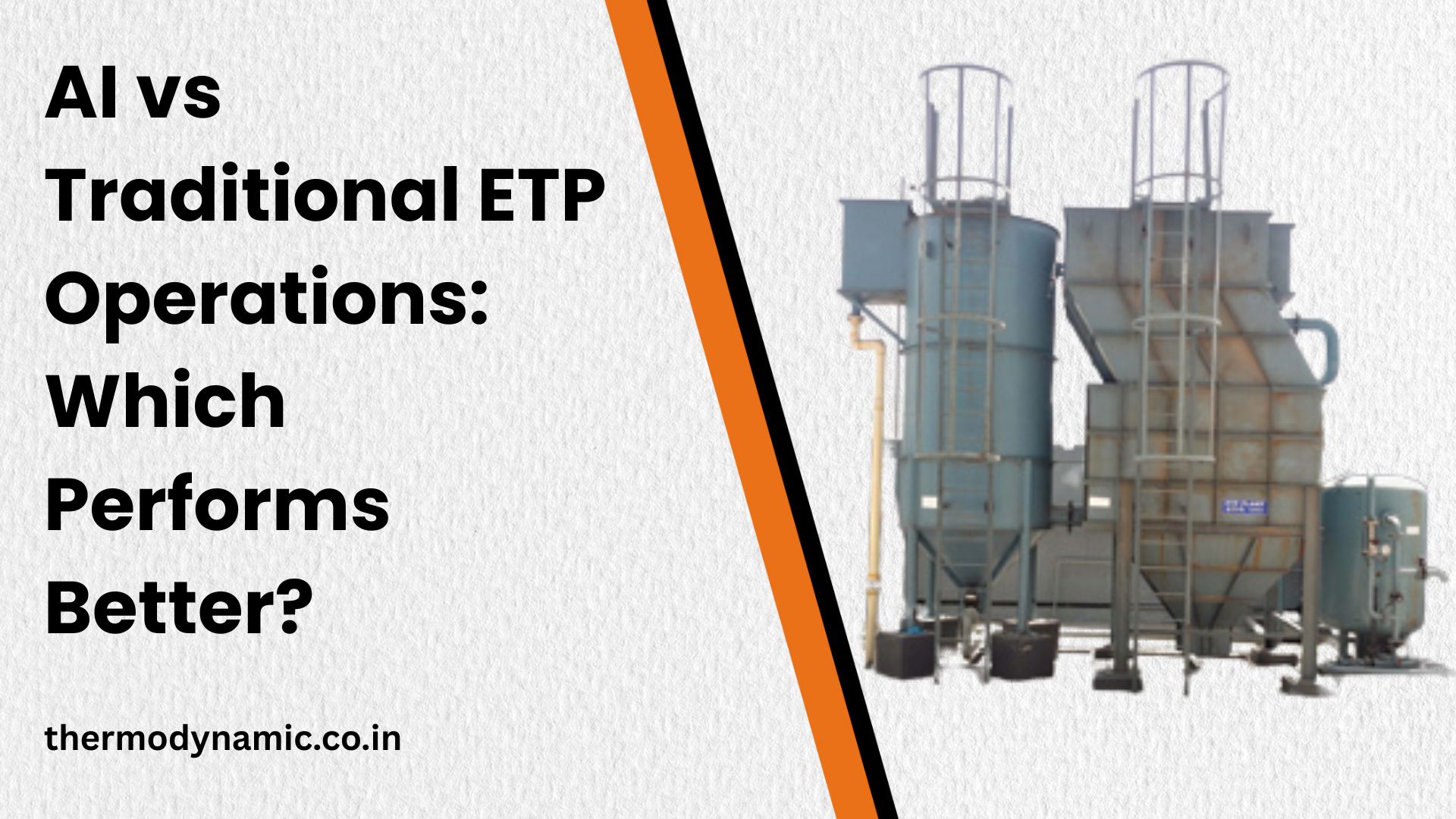
An ETP plant for industrial use in Kanpur is designed to treat industrial wastewater by removing physical, chemical, and biological contaminants before discharge or reuse. These treatment plants help industries comply with pollution control regulations while protecting water resources and minimizing environmental impact.
Traditional ETP systems rely heavily on manual monitoring, operator experience, and scheduled maintenance. In contrast, AI-enabled treatment plants use intelligent sensors, automation, machine learning, and real-time analytics to continuously monitor plant performance and optimize treatment efficiency.
Modern ETP solutions generally include wastewater collection systems, equalization tanks, chemical dosing units, clarifiers, biological treatment units, filtration systems, sludge management equipment, and advanced monitoring platforms.
Conventional ETP systems require regular manual inspections and operator intervention to monitor water quality parameters such as pH, Total Suspended Solids (TSS), Chemical Oxygen Demand (COD), Biological Oxygen Demand (BOD), and dissolved oxygen levels.
While traditional systems have served industries for decades, they may experience challenges such as delayed fault detection, inconsistent chemical dosing, higher maintenance costs, and increased dependency on skilled operators.
An advanced ETP plant for industrial use in Kanpur, equipped with AI technologies, continuously collects operational data through smart sensors. AI algorithms analyze this information to optimize chemical dosing, aeration, pumping schedules, sludge handling, and overall treatment efficiency.
Machine learning models also predict equipment failures before breakdowns occur, helping industries reduce downtime and improve operational reliability.
AI continuously monitors wastewater quality, equipment performance, flow rates, and treatment efficiency using intelligent sensors.
Instead of relying solely on scheduled maintenance, AI identifies early warning signs of equipment wear and recommends timely maintenance activities.
A modern ETP plant for industrial use in Kanpur uses AI to calculate precise chemical dosing requirements based on incoming wastewater characteristics, reducing chemical consumption and improving treatment consistency.
Machine learning algorithms automatically adjust operational parameters to maximize treatment efficiency while minimizing energy consumption.
Cloud-based monitoring platforms enable engineers and plant managers to access operational data remotely, allowing faster decision-making and improved plant oversight.
AI generates automated reports covering treatment efficiency, energy consumption, compliance data, equipment health, and operational trends.
AI continuously optimizes treatment processes, resulting in more consistent wastewater quality and improved pollutant removal.
By reducing chemical consumption, minimizing energy usage, and preventing equipment failures, AI lowers long-term operational expenses.
Predictive maintenance helps identify potential failures before they disrupt plant operations.
An ETP plant for industrial use in Kanpur, equipped with intelligent monitoring, helps industries maintain consistent compliance with environmental discharge standards.
AI improves water reuse opportunities by maintaining stable treatment performance and optimizing filtration processes.
Historical and real-time operational data enable plant managers to identify trends, improve efficiency, and make informed maintenance decisions.
Modern ETP systems support wastewater treatment across numerous industrial sectors.
Textile manufacturing generates wastewater containing dyes, chemicals, and suspended solids that require advanced treatment before discharge.
Pharmaceutical facilities require precise treatment systems capable of handling complex organic compounds and chemical residues.
Wastewater generated during food production contains organic matter, oils, and suspended solids that must be treated efficiently.
Chemical industries require robust wastewater treatment solutions capable of managing hazardous compounds and variable wastewater characteristics.
Leather processing facilities generate wastewater containing chromium, salts, and organic contaminants that require specialized treatment.
Paper mills produce wastewater with high suspended solids and organic loads requiring effective clarification and biological treatment.
Automotive industries generate wastewater containing oils, grease, paint residues, and heavy metals that demand comprehensive treatment solutions.
An advanced ETP plant for industrial use in Kanpur supports these industries by delivering reliable wastewater treatment while improving operational efficiency.
Industrial wastewater regulations continue to become more stringent, requiring businesses to maintain higher treatment standards and improve environmental performance.
AI enables proactive plant management by continuously monitoring operational conditions and identifying performance deviations before they affect compliance.
An intelligent ETP plant for industrial use in Kanpur also helps industries reduce water consumption through improved recycling and reuse strategies, supporting sustainability initiatives while lowering operational costs.
Additionally, AI improves workplace safety by minimizing manual intervention in hazardous treatment processes and reducing the likelihood of equipment failures.
Selecting the right wastewater treatment solution requires careful evaluation of operational requirements and future business needs.
Analyze wastewater volume, contaminant concentration, pH levels, COD, BOD, TSS, and industry-specific pollutants before selecting a treatment system.
Choose an ETP plant for industrial use in Kanpur capable of handling both current production levels and future expansion.
Evaluate AI capabilities, process automation, intelligent monitoring, and remote management features.
Energy-efficient equipment reduces long-term operating expenses and improves plant sustainability.
Ensure the treatment plant meets applicable environmental standards and pollution control requirements.
Reliable technical support, spare parts availability, and preventive maintenance services contribute to long-term operational performance.
Future-ready ETP systems should accommodate increasing production capacity without requiring major infrastructure changes.
Thermodynamic Services is a reputable supplier of ETP plant for industrial use in Kanpur, offering dependable and effective wastewater treatment solutions to a variety of sectors. The business constructs each ETP plant for industrial use in Kanpur with a strong emphasis on quality engineering, regulatory compliance, and cutting-edge treatment technologies to guarantee consistent performance, lower operating costs, and long-term sustainability. Businesses searching for a dependable ETP plant for industrial use in Kanpur may rely on Thermodynamic Services for tailored solutions, competent technical support, and systems developed to satisfy increasing industrial wastewater treatment standards.
For more info, get in touch with us today!
The wastewater treatment industry continues to evolve with the adoption of advanced digital technologies.
AI is becoming a standard feature in modern ETP systems for predictive analytics, automated optimization, and intelligent monitoring.
Smart sensors continuously collect operational data that improves treatment accuracy and maintenance planning.
Industrial facilities increasingly use cloud platforms to monitor multiple wastewater treatment plants from centralized control centers.
Virtual models of treatment plants allow engineers to simulate operational changes and improve plant performance before implementation.
Modern industries increasingly integrate advanced filtration and recycling technologies to reduce freshwater consumption.
Industries are investing in environmentally responsible treatment technologies that reduce energy consumption, improve sludge management, and maximize water recovery.
Artificial intelligence is transforming industrial wastewater treatment by making effluent treatment plants more efficient, reliable, and cost-effective than traditional systems. While conventional ETP operations continue to serve many industries, AI-enabled technologies provide significant advantages through predictive maintenance, intelligent monitoring, automated process optimization, and improved regulatory compliance.
Investing in a modern ETP plant for industrial use in Kanpur helps businesses improve wastewater treatment performance, reduce operating costs, optimize resource utilization, and support long-term sustainability goals. As industrial operations become increasingly data-driven, AI-powered wastewater treatment systems are expected to play an even greater role in enhancing environmental performance and operational efficiency.
An ETP plant for industrial use in Kanpur treats industrial wastewater by removing physical, chemical, and biological contaminants before discharge or reuse.
AI improves wastewater treatment through real-time monitoring, predictive maintenance, automated chemical dosing, intelligent process optimization, and advanced performance analytics.
Industries such as textiles, pharmaceuticals, chemicals, food processing, paper, leather, automotive, and manufacturing commonly require ETP systems.
Businesses should evaluate wastewater characteristics, treatment capacity, automation level, energy efficiency, compliance requirements, maintenance support, and future scalability.
AI-enabled ETP plants provide higher treatment efficiency, lower operational costs, improved regulatory compliance, predictive maintenance, reduced downtime, and better resource management, making them an attractive long-term solution for industrial wastewater treatment.
Read More: AI vs Traditional ETP Operations: Which Performs Better?
