-
-
CALL US NOW
+91 78600 24700

Introduction
Water conservation has become a critical priority for hotels across India. Rising water demand, increasing utility costs, environmental regulations, and sustainability goals are encouraging hospitality businesses to adopt efficient wastewater treatment solutions. An STP plant for hotels in Kanpur plays a significant role in reducing freshwater consumption while ensuring compliance with environmental standards.
Hotels generate substantial quantities of wastewater from guest rooms, kitchens, laundries, swimming pools, and landscaping activities. Instead of discharging untreated wastewater, modern sewage treatment plants (STPs) allow hotels to recycle and reuse treated water for non-potable applications. This not only conserves water resources but also reduces operational expenses and supports sustainable business practices.
In a city like Kanpur, where industrial and urban development continue to increase water demand, installing an STP plant for hotels in Kanpur has become a practical and environmentally responsible investment.
An STP plant for hotels in Kanpur is designed to collect, treat, and recycle sewage generated within hotel premises. The treatment process removes contaminants, suspended solids, organic matter, and harmful microorganisms from wastewater, making it suitable for reuse.
Modern STPs use advanced treatment technologies such as the following:
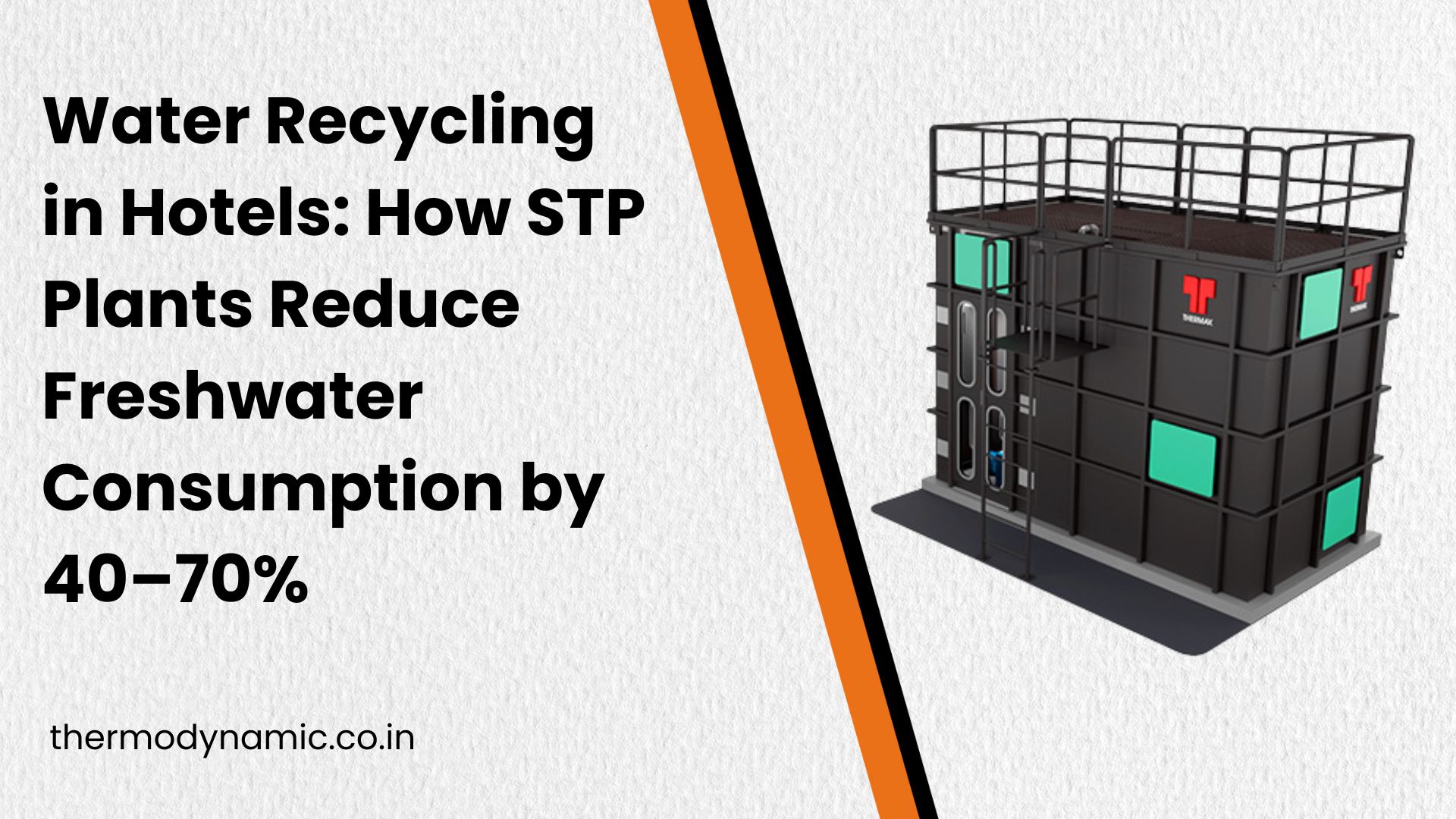
These systems help hotels achieve water recycling rates of 40–70%, significantly reducing dependency on municipal water supplies and groundwater resources.
Similarly, an STP plant for hospitals operates on comparable principles but is often designed to handle specialized wastewater streams generated by healthcare facilities.
Modern STPs utilize biological processes to efficiently break down organic pollutants and improve water quality.
Many hotel properties have limited space. Contemporary STP systems are available in compact configurations that require minimal installation area.
Automation reduces manual intervention and ensures consistent treatment performance through intelligent monitoring and control systems.
Advanced odor management systems maintain a pleasant environment for guests and hotel staff.
A well-designed STP plant for hotels in Kanpur enables treated water reuse for flushing, gardening, cooling towers, and cleaning activities.
Modern treatment technologies are designed to minimize power consumption while maintaining high treatment efficiency.
One of the biggest advantages of an STP plant for hotels in Kanpur is its ability to recycle wastewater. Hotels can reduce freshwater usage by 40–70% through effective water reuse practices.
Recycled water decreases dependence on external water sources, resulting in substantial long-term cost savings.
Environmental authorities increasingly require commercial establishments to manage wastewater responsibly. An STP helps hotels meet regulatory requirements.
Sustainability is becoming an important factor for travelers and corporate clients. Hotels with wastewater recycling systems demonstrate environmental responsibility.
Many regions face groundwater depletion challenges. Treated wastewater provides an alternative water source for non-drinking purposes.
Properties equipped with modern environmental infrastructure often gain a competitive advantage and improved market reputation.
In a variety of sectors, Thermodynamic Services has built a solid reputation for providing dependable and effective wastewater treatment solutions. Their proficiency in planning and executing an STP plant for hotels in Kanpur enables hospitality enterprises to efficiently handle sewage while lowering freshwater usage and guaranteeing environmental compliance. Thermodynamic Services offers specialized treatment systems that enable long-term operational efficiency and sustainable water management for hotels and commercial enterprises with an emphasis on cutting-edge technology, superior engineering, and trustworthy support.
For more info, get in touch with us today!
While hotels are major users of wastewater treatment systems, STPs serve numerous sectors.
An STP plant for hotels in Kanpur helps hospitality businesses manage wastewater efficiently while reducing operating expenses.
An STP plant for hospitals is essential for treating wastewater generated from patient care, laboratories, kitchens, and sanitation facilities.
Many industries use STPs to manage domestic wastewater generated by employees and support sustainable water management practices.
Urban centers are facing increasing pressure on water resources. Hotels consume significant quantities of water daily, making conservation initiatives essential.
Customers increasingly prefer businesses that demonstrate environmental responsibility. Water recycling supports green hospitality initiatives.
Environmental regulations continue to evolve, making proper wastewater treatment an important compliance requirement for commercial establishments.
An STP plant for hotels in Kanpur transforms wastewater into a reusable resource, supporting efficient resource management.
As water tariffs continue to rise, recycling wastewater helps hotels maintain predictable operating costs.
The system should be designed according to the hotel's wastewater generation volume and occupancy levels.
Different technologies offer varying levels of treatment efficiency, operational complexity, and maintenance requirements.
Site conditions should be evaluated to determine the most suitable plant layout and configuration.
The intended application of treated water influences treatment specifications and technology selection.
Energy-efficient systems can significantly reduce operational costs over the plant's lifecycle.
Regular maintenance is essential for consistent performance. Buyers should evaluate service support and maintenance accessibility.
The chosen system must meet applicable wastewater discharge and reuse regulations.
Hotels expecting future expansion should consider systems that can accommodate increased wastewater volumes.
Digital monitoring technologies enable real-time performance tracking and predictive maintenance.
Internet of Things (IoT) solutions help operators monitor water quality, flow rates, and equipment performance remotely.
Membrane technologies are becoming increasingly popular due to their superior treatment efficiency and compact design.
Many organizations are adopting advanced treatment systems to maximize water recovery and minimize wastewater discharge.
Manufacturers are focusing on reducing energy consumption while improving treatment performance.
Hotels are increasingly integrating wastewater recycling into broader sustainability and ESG strategies.
The concept of reusing water multiple times within a facility is gaining momentum across the hospitality sector.
Water conservation has become a strategic priority for the hospitality industry. An STP plant for hotels in Kanpur provides an effective solution for managing wastewater, reducing freshwater consumption, and supporting sustainable operations. By recycling treated water for non-potable applications, hotels can significantly reduce operational costs while contributing to environmental protection.
As water resources become increasingly stressed, investing in reliable wastewater treatment infrastructure is no longer just a compliance measure—it is a practical business decision. The same principles apply to an STP plant for hospitals, commercial facilities, and residential developments seeking long-term water sustainability.
By selecting the right technology, ensuring proper maintenance, and embracing modern treatment innovations, organizations can achieve efficient water management while meeting environmental and operational objectives.
The system treats wastewater generated within the hotel and enables its reuse for flushing, gardening, cooling towers, and cleaning, reducing freshwater demand by 40–70%.
Popular technologies include MBBR, SBR, MBR, ASP, and tertiary filtration systems, depending on treatment requirements and available space.
Yes, when treated according to prescribed standards, the water can be safely used for various non-potable applications.
An STP plant for hospitals may require additional treatment stages to address specialized contaminants and meet stricter discharge requirements.
The cost depends on treatment capacity, technology selection, automation level, space availability, water reuse objectives, and maintenance requirements.
Read More: Water Recycling in Hotels: How STP Plants Reduce Freshwater Consumption by 40–70
