-
-
CALL US NOW
+91 78600 24700

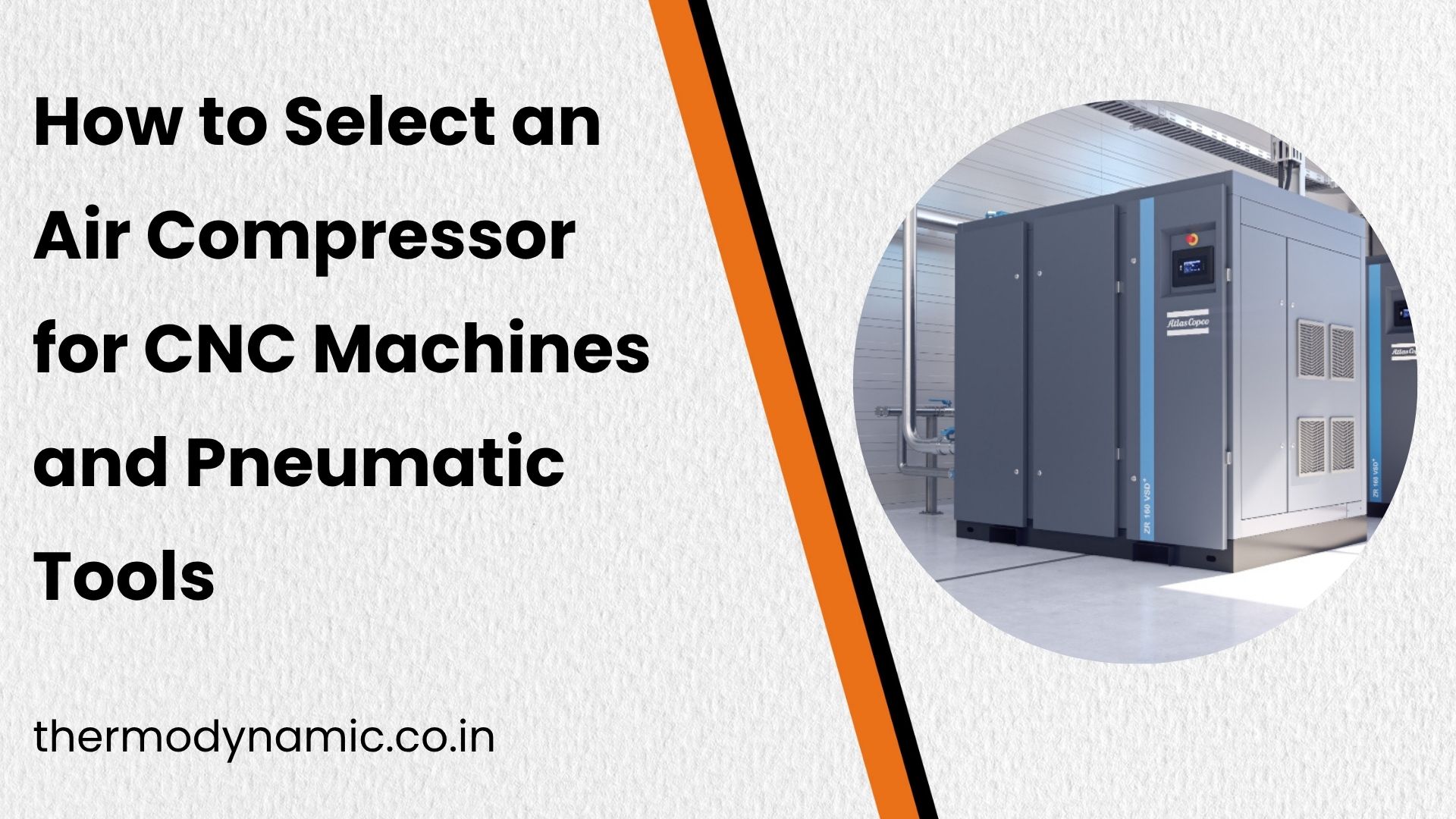
Selecting the right air compressor for CNC machines and pneumatic tools begins with matching the compressor’s free air delivery (FAD), pressure rating, and duty cycle to the exact air demand of your equipment while ensuring clean, dry air delivery. This decision directly affects machine precision, tool life, energy costs, and uptime.
CNC machines and pneumatic tools rely on consistent compressed air. CNC spindles, tool changers, clamps, and coolant systems often need steady pressure between 6 and 8 bar. Pneumatic tools such as impact wrenches, grinders, sanders, and nailers demand higher intermittent flows. Undersized or poorly matched compressors cause pressure drops, incomplete cycles, and premature wear. Oversized units waste energy and capital.
Add the continuous and intermittent air consumption of every CNC machine and tool. Manufacturers list CFM or m³/min requirements. Apply a 20–30% safety margin for future expansion and leaks. Measure existing system demand with a flow meter if upgrading.
2. Determine required pressure
Most CNC applications run effectively at 6–7 bar. Pneumatic tools may need peaks near 8–10 bar. Choose a compressor whose maximum working pressure sits comfortably above your highest requirement so the unit does not constantly load at its limit.
3. Choose the right technology
4. Air quality and treatment
CNC machines and precision tools suffer from moisture, oil carry-over, and particles. Install refrigerated or desiccant dryers, coalescing filters, and particulate filters downstream. Aim for ISO 8573-1 Class 1.4.1 or better depending on the process.
5. Duty cycle and installation environment
Continuous 24/7 operation favors oil-injected or oil-free screw compressors with proper cooling. Consider ambient temperature, ventilation, noise limits, and available floor space. Outdoor or dusty environments need weatherproof or specially filtered packages.
6. Energy efficiency and total cost of ownership
Electricity typically accounts for 70–80% of lifetime compressor cost. Look at specific power (kW per m³/min), heat recovery options, and smart controllers that minimize unloaded running time.
|
Feature |
Reciprocating (Piston) |
Fixed-Speed Screw |
VSD Screw |
Oil-Free Screw |
|
Best for |
Intermittent, small shops |
Steady continuous demand |
Variable demand |
High air purity needs |
|
Noise level |
Higher |
Moderate |
Moderate |
Moderate |
|
Energy efficiency |
Lower at partial load |
Good at full load |
Excellent across loads |
Good to excellent |
|
Maintenance interval |
More frequent |
Longer |
Longer |
Specialized |
|
Typical pressure range |
Up to 10–12 bar |
7–13 bar |
7–13 bar |
7–10 bar |
|
Initial cost |
Lowest |
Medium |
Higher |
Highest |
|
Suitability for CNC |
Light duty only |
Good |
Excellent |
Excellent for critical parts |
A fabrication shop in Uttar Pradesh running three CNC machining centres and a bank of pneumatic grinders experienced frequent pressure drops below 5.5 bar during peak shifts. The existing 15 kW fixed-speed piston compressor ran almost continuously and produced oily, moist air that contaminated tool holders. After measuring demand (average 45 CFM, peaks 70 CFM at 7 bar), the team installed a 37 kW VSD rotary screw compressor with integrated dryer and filtration. Pressure stabilised at 7 bar, energy consumption dropped approximately 35%, and tool-change reliability improved. Downtime related to air quality disappeared within the first month.
In regions such as Kanpur and across Uttar Pradesh, many workshops face similar challenges of fluctuating loads, power quality, and the need for dependable local support. Experienced partners who understand both the equipment and the local industrial environment make a noticeable difference in long-term results.
Thermodynamic Services, based in Kanpur, has built a solid reputation over more than three decades as an authorised channel partner for leading brands including Atlas Copco. Their team regularly assists manufacturers with correct compressor sizing, installation, air treatment packages, and ongoing service for CNC and pneumatic applications throughout Uttar Pradesh. Clients value the practical technical guidance and responsive after-sales support that help keep production lines running smoothly.
1. What CFM rating do I need for a typical CNC machine?
Most mid-size CNC machining centres require 10–25 CFM at 6–7 bar continuously, plus additional capacity for tool changers and clamps. Always check the machine manual and add margin.
2. Can I use the same compressor for CNC machines and pneumatic tools?
Yes, provided the compressor is sized for the combined peak demand and air quality is adequate. Separate regulators and filters at the point of use are recommended.
3. Is a VSD compressor worth the higher initial cost?
In shops with varying air demand (common with multiple CNC machines and tools), VSD units usually pay back the premium within 18–36 months through energy savings.
4. How often should compressed air systems be maintained?
Follow the manufacturer’s schedule—typically filter changes every 2,000–4,000 hours, oil and separator changes at recommended intervals, and annual professional inspections.
5. What air purity level is safe for CNC spindles and pneumatic tools?
ISO 8573-1 Class 2.4.2 or better is generally acceptable. Higher-precision or oil-sensitive processes may require Class 1.2.1 or oil-free generation.
Choosing the correct air compressor for CNC machines and pneumatic tools requires careful calculation of demand, selection of appropriate technology, attention to air quality, and realistic assessment of total ownership cost. A well-matched system improves machining accuracy, extends tool life, lowers energy bills, and reduces unplanned downtime.
When you are ready to specify or upgrade your compressed air system, consult an experienced industrial air compressor manufacturer & supplier in Kanpur such as Thermodynamic Services. Their practical expertise as an industrial air compressor dealer in Uttar Pradesh can help you move from calculation to reliable, efficient operation with confidence.
Read More: How to Select an Air Compressor for CNC Machines and Pneumatic Tools
