-
-
CALL US NOW
+91 78600 24700

Electric Overhead Travelling (EOT) cranes are essential material-handling systems for factories, warehouses, engineering plants, fabrication units, power facilities, and other industrial environments. They enable the controlled movement of heavy loads across designated working areas, helping industries improve handling efficiency and reduce dependence on manual lifting.
However, installing an EOT crane involves much more than positioning the crane on a runway. Structural conditions, electrical systems, lifting capacity, installation procedures, safety requirements, testing, and operator considerations all need to be addressed before the equipment becomes operational.
For businesses searching for an EOT crane dealer in Uttar Pradesh, understanding the installation process can make it easier to evaluate suppliers and plan a safe, reliable crane project.
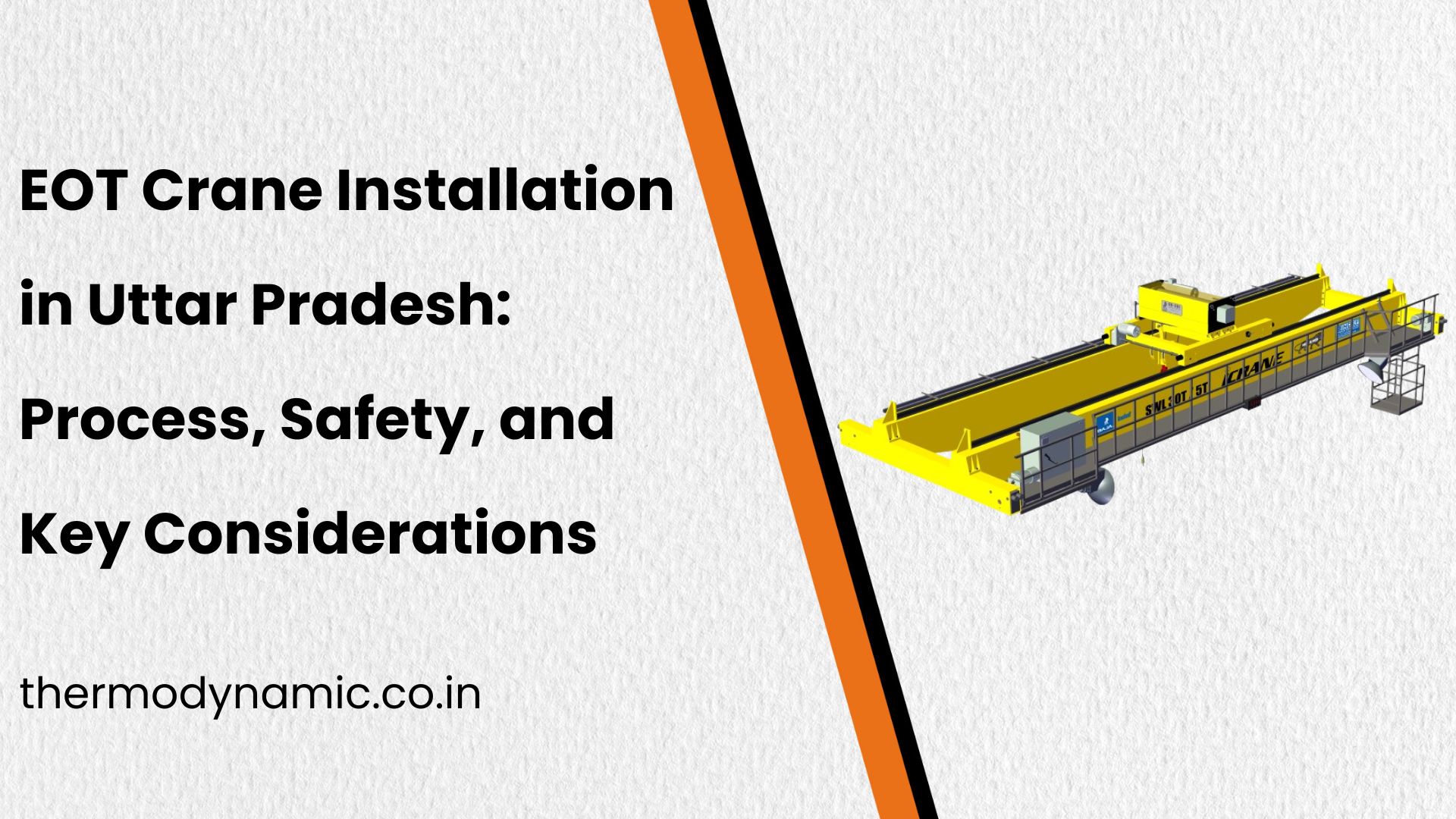
An EOT crane is an overhead lifting system that generally consists of a bridge, end carriages, hoisting mechanism, trolley, electrical controls, and runway system. The bridge travels along parallel runway rails, while the trolley and hoist move the load across the working area.
Depending on the application, EOT cranes can be designed with different lifting capacities, spans, lifting heights, speeds, and control configurations.
They are commonly used in:
A systematic installation process helps reduce commissioning problems and supports safe operation.
Installation begins with understanding the site. Engineers typically assess the building structure, runway arrangement, available headroom, lifting requirements, power supply, operating environment, and working area.
The crane's capacity and dimensions should correspond with the actual application. Factors such as maximum load, lifting frequency, span, hook height, travel distance, and operating conditions should be considered before finalising the equipment.
The supporting structure plays a critical role in overhead crane installation. Runway beams, rails, columns, brackets, and connection points need to be evaluated for suitability.
Alignment is particularly important. Incorrect runway alignment can affect crane movement, increase mechanical stress, and contribute to premature wear.
Any structural modifications should be completed according to appropriate engineering requirements before the crane installation progresses.
After the crane components reach the site, major assemblies should be inspected for transportation damage and checked against the approved specifications.
Typical components include the bridge girder, end carriages, trolley, hoist, electrical panels, festoon or conductor systems, controls, wheels, and safety devices.
Proper identification and organised handling of components can make the installation process more efficient.
The bridge structure and associated components are assembled using suitable lifting equipment and an approved erection plan.
Depending on the crane configuration and site conditions, the bridge may be assembled at ground level before being lifted into position or erected in sections.
The installation team needs to consider lifting capacity, access restrictions, working-at-height risks, exclusion zones, and communication between personnel during erection.
Once the crane is positioned on the runway, mechanical components are checked and installed. This includes the wheels, end carriages, hoisting mechanism, trolley, brakes, hooks, ropes or chains where applicable, and other mechanical systems.
Fasteners and connections should be checked according to the manufacturer's specifications. Lubrication requirements and component clearances should also be verified.
The electrical system connects the crane to its power source and controls. Depending on the design, this may include conductor systems, control panels, pendant controls, radio remote controls, limit switches, emergency-stop systems, and other electrical equipment.
Electrical installation should be carried out by qualified personnel. Proper earthing, cable routing, protection, isolation, and control functionality are important for safe operation.
Testing is one of the most important stages before an EOT crane is handed over for regular use.
The installation team may check crane travel, trolley movement, hoisting and lowering functions, braking performance, controls, limit switches, emergency systems, and other safety features.
Load testing and commissioning should follow applicable requirements, manufacturer instructions, approved procedures, and site-specific safety protocols.
Crane installation involves several hazards, particularly during lifting, assembly, electrical work, and work at height.
Important precautions include:
A dedicated installation plan and competent supervision can significantly improve site safety.
Selecting the crane before understanding the application can create operational and maintenance challenges. Businesses should evaluate:
Load capacity: Determine the maximum working load and consider the nature and frequency of lifting operations.
Span and runway length: The crane dimensions should match the available building and material-handling area.
Lifting height: Hook height should accommodate the highest required lifting point while maintaining suitable clearances.
Duty cycle: Crane classification and configuration should reflect the expected frequency and intensity of operation.
Operating environment: Temperature, dust, moisture, corrosive conditions, and hazardous areas may influence equipment selection.
Controls: Pendant, cabin, or radio remote operation can be selected based on operational requirements and site layout.
An EOT crane is a safety-critical industrial system. Poor installation can result in alignment problems, excessive component wear, operational interruptions, or unsafe working conditions.
Professional installation combines equipment knowledge with site-specific engineering considerations. It also creates an opportunity to identify potential issues before the crane enters routine service.
Documentation is equally important. Installation records, inspection reports, test results, equipment manuals, and maintenance information can support future inspections and maintenance planning.
Thermodynamic Services has experience supporting industrial businesses with material-handling and engineering requirements, with a focus on practical site considerations and dependable project execution. Its approach to EOT crane solutions can help businesses address equipment selection, installation, commissioning, and service requirements while keeping operational needs and safety considerations in focus. For industrial facilities across Uttar Pradesh, such a structured approach can be valuable when integrating lifting equipment into existing or newly developed plants.
Installation is only the beginning of an EOT crane's service life. Regular inspections and preventive maintenance help identify issues before they become major operational problems.
Maintenance programs may cover brakes, ropes, hooks, wheels, bearings, electrical systems, limit switches, controls, structural components, and other critical parts. Inspection frequency should be determined according to equipment usage, manufacturer recommendations, applicable requirements, and site conditions.
Operators should also report unusual noise, vibration, irregular movement, brake issues, or control problems promptly rather than continuing to operate equipment with a suspected fault.
EOT crane installation requires careful planning, accurate site assessment, competent erection, proper electrical and mechanical integration, thorough testing, and attention to safety. From runway alignment to commissioning, each stage can influence the crane's reliability and operating life.
Businesses looking for an EOT crane dealer in Uttar Pradesh should therefore consider more than equipment specifications and price. Installation capability, technical support, commissioning practices, maintenance services, and understanding of industrial applications are also important when evaluating a supplier.
If you are planning an EOT crane project and need an experienced EOT crane dealer in Uttar Pradesh, connect with Thermodynamic Services to discuss your lifting requirements, site conditions, installation needs, and ongoing service requirements. A properly planned crane solution can help create a safer and more efficient material-handling operation.
An EOT crane is used to lift and move heavy materials horizontally and vertically within industrial facilities such as manufacturing plants, warehouses, engineering workshops, and fabrication units.
Installation time depends on crane capacity, span, structural readiness, site access, runway condition, electrical requirements, and project complexity. A site assessment can provide a more accurate installation schedule.
The building structure, runway beams and rails, available headroom, power supply, lifting requirements, operating area, access conditions, and required safety provisions should be evaluated before installation.
Yes. Functional checks, safety-system verification, and appropriate load or commissioning tests should be completed according to applicable requirements, manufacturer instructions, and approved site procedures before routine operation.
Consider the dealer's technical expertise, equipment suitability, installation capabilities, commissioning support, maintenance services, safety practices, and ability to understand your specific industrial application.
Read More: EOT Crane Installation in Uttar Pradesh: Process, Safety, and Key Consideration
